
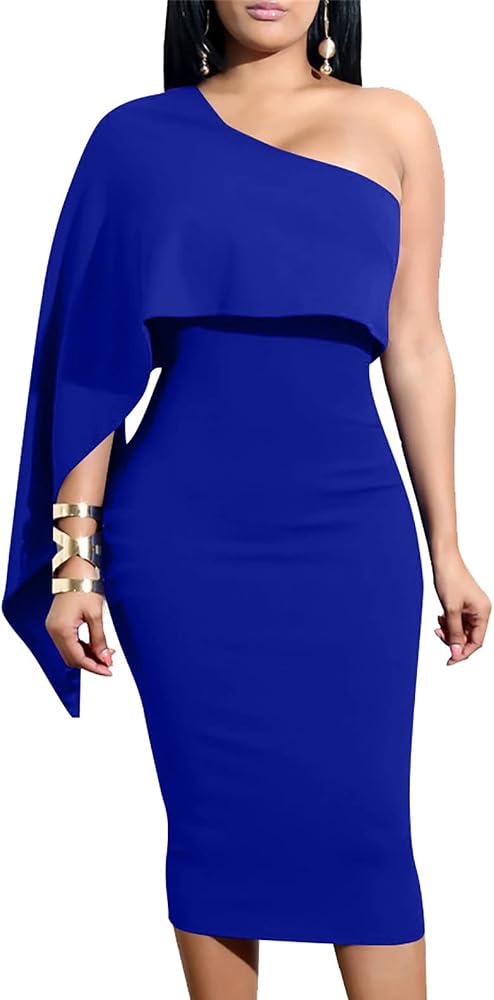
 Backless
A royal blue one-shoulder midi dress featuring a sweeping cape sleeve and a close bodycon cut through the skirt.
17,025 ratings
$39.99last seen
Night notes · Choosing notes · 3 min read
We cut our party dresses into two distinct silhouettes across the table. Length alters how tension runs along side seams, how cloth gathers when you sit, and how a hem travels through an evening. Here is how the construction differs between our midi hems and our short skirts.
A mini hem finishes high on the leg, leaving the knees bare. When you walk, the tension stays concentrated around the hips and across the lower belly. A midi brings that same stretch knit down past the knee toward mid-calf. That extra panel of cloth creates continuous friction against the legs as you step. The side seams pull downward with each stride, which anchors the torso in place. On a dance floor, a mini allows full stride without dragging on the fabric. A midi requires a controlled walk, because the narrow tube of knit holds both legs within the same circumference until you stop moving.
Sitting down changes the distribution of stretch throughout the entire dress. A mini rides upward the moment the hips hinge at a chair. The hem climbs, and the excess cloth gathers in horizontal folds across the lap. A midi behaves differently on a seat. The hem stays below the knee, holding the lower legs covered while you lean back. For a seated dinner, a work gathering that transitions to a restaurant table, or a first meeting with hosts, that stability matters. You do not spend the evening pulling fabric back toward your knees. The neckline and shoulders stay aligned because the lower hem keeps tension balanced.
Adding length does not convert a bodycon dress into a loose column. We use the same stretch knit and stretch velvet blocks for our longer cuts. The waist is taken in. The hip curve follows the same pattern line as our shortest dresses. A ruched midi wraps the ribcage and thighs with identical firmness. The ruching gathers excess cloth along vertical seams, which locks the knit against the skin from the chest down to the calf. If you choose the midi because you want extra room around the torso, you will not find it there. The fit remains tight along every single seam.
The mini works best when an evening is spent upright. On a crowded dance floor or standing by a bar counter, the short skirt avoids friction against the shins and keeps the garment cool. The back zip stays flat because the body remains vertical. The midi suits long stretches in a cab, a low booth, or a formal dinner setting. The longer skirt creates a continuous line of fabric across the table, shifting focus to the collarbone, the sleeve, and the neckline. It eliminates hem readjustment during long conversations. It handles transitions between indoor seating and cooler outdoor air with less bare skin exposed.
A midi contains more square yardage of stretch knit than a short dress. That extra surface holds more water when it comes out of a cold wash. Never hang a wet midi dress on a thin hanger. The weight of the damp skirt will pull on the shoulder seams and stretch the neckline out of shape. Lay the dress flat across a drying rack instead, or place it inside a mesh bag before running a gentle cycle. Stretch velvet midis should be dried flat to preserve the direction of the pile. Both lengths need identical gentle handling, but the midi requires more drying space on the rack.
Both lengths rely on the same close block and stretch construction. Pick the mini for continuous movement on your feet. Choose the midi for stability during seated evenings and longer events. The fit through the waist and hips remains tight on both cuts.
Four pieces from the midi dresses section, most rated first.
Backless17,025 ratings
$39.99last seen
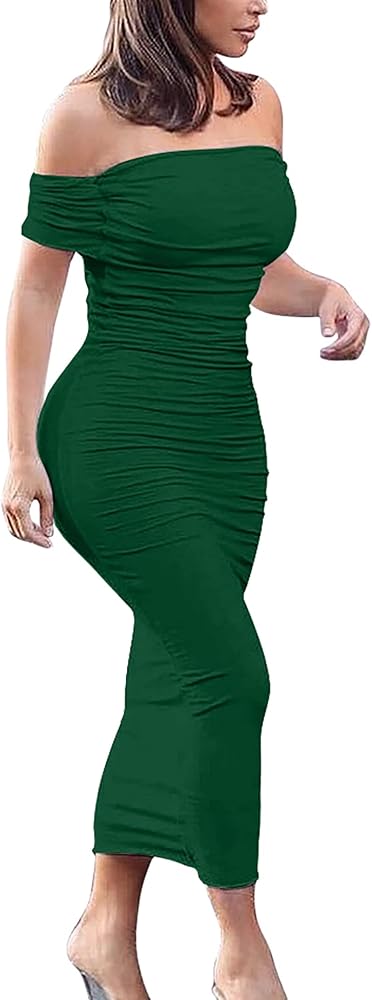 Off shoulder
10,068 ratings
$31.99last seen
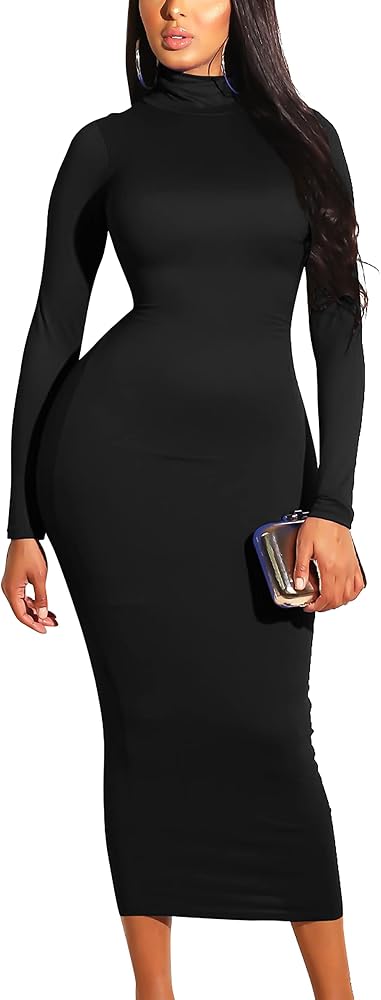
4,620 ratings
$24.99last seen
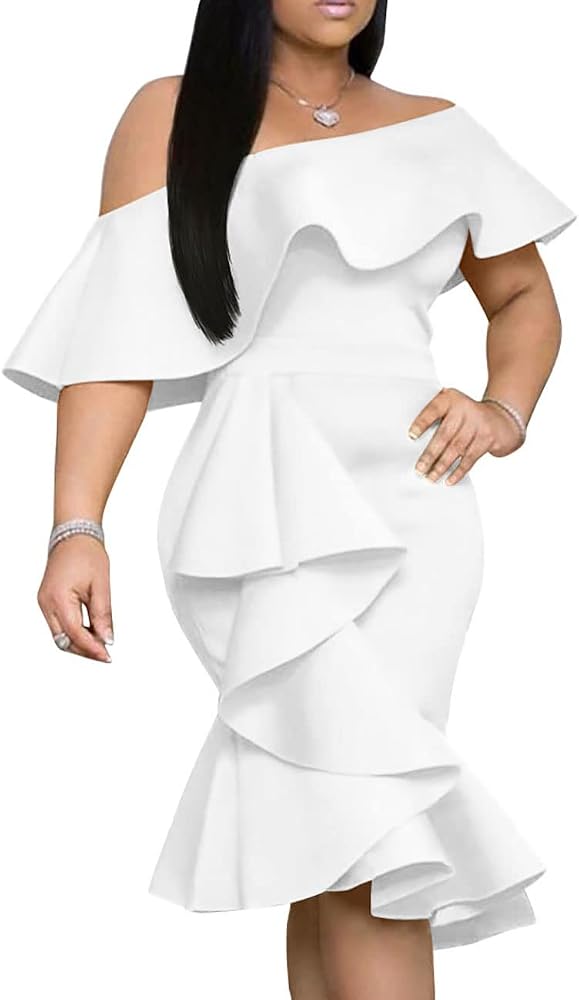 Off shoulder
2,883 ratings
$49.99last seen